Tuesday, February 22, 2011

Christmas away- then Titusville to Bonaire Jan.12-Feb.14, 2011

Dan and I left Sea Star at Titusville Municipal Marina and headed home to MA for Christmas and New Years with family. After so much time away from them all, it was a wonderful but short visit!

 While there we visited friends, refreshed our memories about snow and cold, visited our doctors and drove back to Florida to begin our next adventure.  We had been asked to house sit and take care of a sweet little cat for ex-cruising friends on the small Dutch Island of Bonaire while they traveled.  Lucky us!  The home was gorgeous with great views from the patio and swimming pool and cooling breezes off the ocean throughout the night.

Here is a picture of the kitty!
From Bandit
HEY MOM AND DAD,
I'M HAVING A PARTY!
LOVE, BANDIT


Bonaire is the "B" of the A, B, C islands about 60 miles from Venezuela.  The others are Aruba and Curacaio.

Bonaire is well known for its excellent scuba diving.  The diving has been listed as "Best" in many catagories in Scuba Magazine for over five years although diving opened in Bonaire many years ago when "windows" to the reefs were opened from many different sites from the shore.

Dan and I, and our visitors enjoyed our water time out of the pool by snorkeling many shore sites. Red Beryl, Andrea, Tolo, 1000 Steps are some famous names. Reef fish such as huge Parrot Fish, French Angels, and so many others I can't list them, along with octopus, Moray Eels of many types and sea turtles were easily seen. We really didn't even have time to consider grabbing a boat to Klein Bonaire, a smaller uninhabited island ringed with reef.


 In the month we stayed in Bonaire we explored any drivable road on the 30 mile long island, went into and around the Washington Slagbaai Park by rental truck and had an incredible time. We watched flamengos and saw areas where the ancient Indian tribes inscribed pictorial language.

Here are some tourist- type pictures. The water is a fantastic color of blue with shallows green-blue.  Corals show somewhat brown from the surface. Although we saw herds up to fifty of the wild free ranging goats, I didn't take a picture, darn.

click for slide show

visitors Bonaire


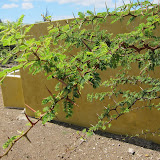
Bonaire is a very dry island, and the temperatures are very warm.  While we were there the day temperature was 84 degrees with water temperature about 80 degrees on the surface where we snorkeled. The landscape often shows trees bent by the wind, underfoot are sharp and deadly coral rocks.  The early Europeans brought goats and donkeys to the island where their decendants still roam freely.  To protect themselves the low, scrubby bushes, trees and shrubs these introduced animals constantly feed on have developed deadly weapons, THORNS, which my pictures will show you.  Thorns make it difficult for people living on the island.  One problem they have and we had to watch out for, is flat tires due to the thorns that grow on bushes but fall to the ground- sticking in the tires.  Like a nail in a tire, when the thorns are removed the tires lose air.

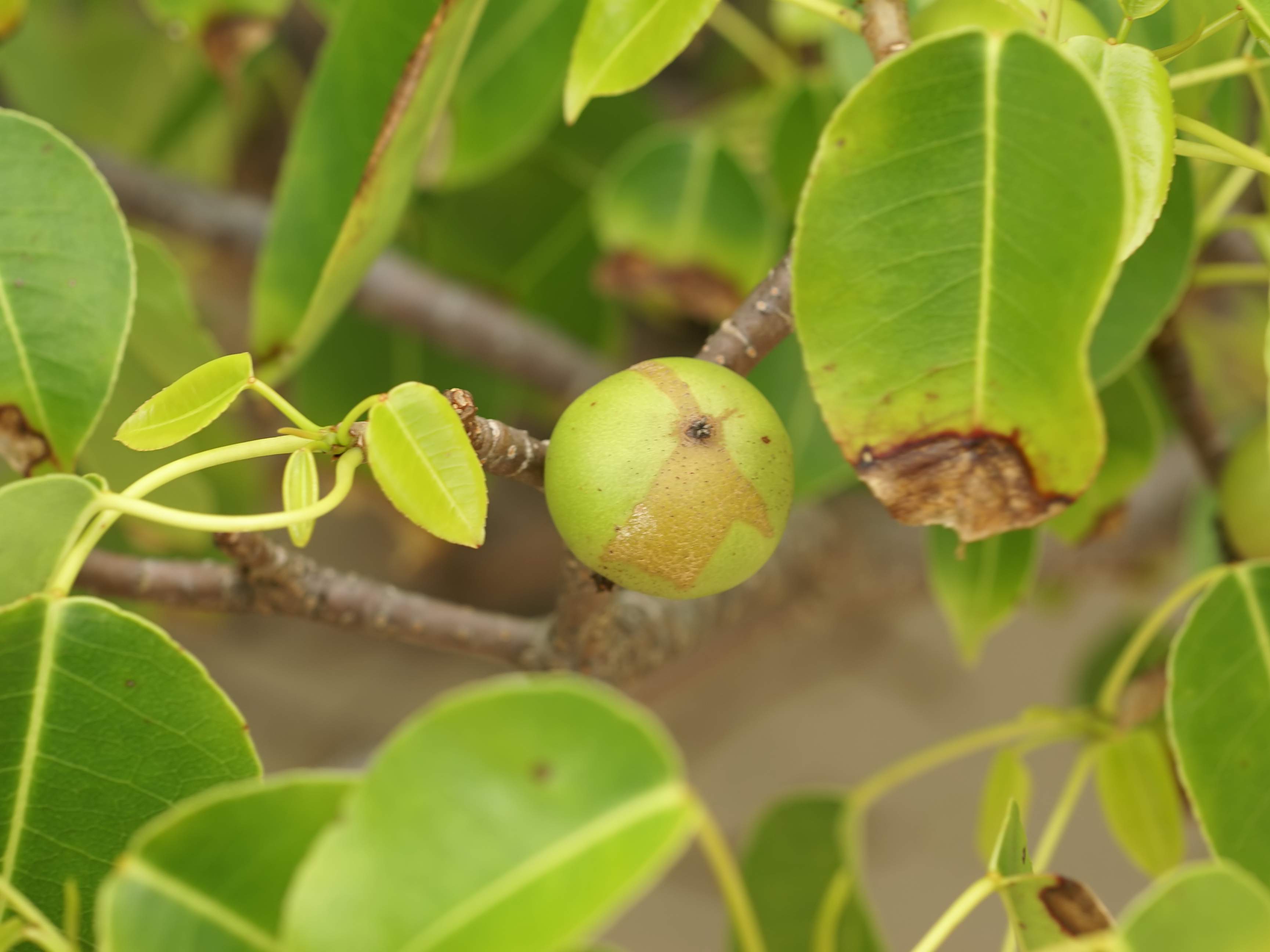
Enjoy these Bonaire pictures  These are the ones that try to show the difficulty for animals, birds and people to live on these islands.  My own collection of Bonaire thorniness!  Not only do thorns and cutting coral rubble liven up the landscape but follow the wiki link to see the deadly tree.  You can't touch it, eat the fruit Or stand under it in the rain.  The result can be skin blistering!

click for slide show
Thorns


http://upload.wikimedia.org/wikipedia/commons/9/92/Hippomane_mancinella_%28fruit%29.jpg


To all our friends and Blog readers.  Dan and I are no longer international.  We're back in Florida with Sea Star but will be heading out on a new adventure probably in the Western USA by motorcycle as soon as Dan picks up a new BMW.  We are not selling Sea Star, just doing something else we want to try. We love to hear from our cruising friends and hope you will continue to email and contact us!

Monday, November 29, 2010

Key West to Lake Worth - Intra Coastal to Titusville, FL Dec. 4-8, 2010

Key West was definately the United States.  There were exciting things on the shelves of markets like the right size screws, aselection of tools, cleaning supplies for the boat that had been unavailable, and of course a real marina with electricity and clean water.  Best of all I hadn't seen a laundromat since....?

The crews of Braveheart, Mystic Moon and Sea Star had a wonderful dinner in town and stopped to play pool at a local watering hole before returning to our boats for the evening.  In the morning we met at famous Pepe's for breakfast--so in between the nine hour days of work on Sea Star we had fun.

Key West was not very busy in December but I could see the attraction when the weather was better in the outlying islands and reefs.  Everybody has a boat, or charters a boat for sailing, fishing, diving and zooming around.

After our boat was ready and tested, Dan and I moved out of the expensive marina and picked up a town mooring.  Bad idea! It was windy and the moorings were on short lines.  They did not provide a bridle for your boat and there did not seem to be a way to slip a line from the boat through the tiny loop at the top of the mooring ball.  Each time I tried something dreadful happened; first I bent the brand new boatpole and dropped it into the water(luckily it floats a bit and we got it back), then I lost the old boatpole as it was pulled out of my hands as I tried to capture the mooring ball-- finally a nice man, a cruiser, arrived through the surf in hid tiny dinghy and put the line through the loop for us.

Key West web


The next day we left the mooring field, without paying as noboby came out to us and we weren't going to put the dinghy down, thinking we would meet uo with Jimmy and Donna on Blue Water Cat in Marathon, Florida- one of the anchorages in the Keys.

Conditions were right to keep on going rather than stop, to beat an approaching cold front.  We were quite anxious by now to arrive at Titusville, some 350 miles away.  We sailed the Hawk Channel, avoiding the many crab pots during the day and just hoping to miss them at night as we moved along for all day and night.  By 2:00AM we were crossing Governer's Cut where the big guys play.

We were surrounded by cruise ships, tankers, and all manner of boats wating to go into Miami.  Sometime in the afternoon we were approaching our goal; the Lake Worth Inlet where we had crossed to the Bahamas from on Thanksgiving of 2008, our first year cruising.   Our arrival at the inlet was just in time.  The front had arrived, roiling the sea and the winds were increasing as we passed through that narrow cut and into the much calmer water within.

The anchorage in Fort Worth was fine for us, but others had run aground getting in there.  Tow Boat US basically was sitting in the anchorage entrance and just waiting like a vulture.  We were able to get some sleep before starting off again at 6:00AM.  Dan had decided that the rest of the trip would be "on the inside" meaning in the Intracoastal Waterway.  The weather was just too cold and windy for another day in the Atlantic.

In the Intracoastal there is always a lot to watch out for so it isn't relaxing at all.  We knew we would have to go under many bridges per day and that movement had to be timed to the bridge's schedule. Our mast is 63 1/2 feet and the most clearance you get is 64 feet on the fixed bridges.  Some areas of the ICW are shallow, or the waters are contained in a channel and a passing motorboat might "wake" you with a tidal wave sized plume of water, and it was Saturday and many boaters were out.  Oh, and did I say it was cold? The temps went into the 40's at night.

One full, long day mostly hand steering from 6:00AM to 6:30PM brought us to Vero Beach Mooring Field, where we rafted up as required with another boat.  Jim was a new cruiser but he had the idea.  As we tied up to his mooring he asked if we wanted some Jerk Chicken!  Totally yummy.  We had a few beers with him and collapsed, waking to start out again at daylight.

The ICW can be lovely.  There is wilderness, some of the lovliest homes in Florida, animals, birds, Manatee if you are lucky and many many red and green markers to go between in the dredged channel.  The trip would have been more enjoyable had the temperature been warmer.  Dan who was driving couldn't get or stay warm.  Check out his pictures wearing everything we had on board.

cold


By dark we were still pushing on toward Titusville.  We went through the last two bridges in the pitch dark and anchored outside the marina for the night.  There were as many as twenty cruising boats in the anchorage and it was soo cold!

That night as we were anchoring there was a huge noise and we were thrilled to watch a rocket take off from the Space Center and shoot brilliantly into the darkness.  We slept well knowing we we basically there and could begin to plan to drive home after we picked up our new car waiting in Tampa. We worried a bit about Patti and Gary who left the Rio a week after we did.  Their weather was really rotton and they were heading to Titusville, too.  We had left Braveheart in Key West at the marina for the military and Mystic was preparing to leave their boat for Christmas, too.

In the morning we tied Sea Star to her new home and prepared to be landlubbers for awhile.

Saturday, November 27, 2010

BACK IN THE USA! ISLA MUJERES to KEY WEST Nov.24-27, 2010

Landfall USA

But first:
Enjoy a few shots of Mexico's Isla Mujeres or Island of the Women.  Holly, Kathleen and I did some sightseeing by golfcart where, from the back facing seat I took most of these shots.

Isla Mujeres web


Sea Star and Braveheart set off sailing from Isla Mujeres, Mexico on 6:00AM Thanksgiving morning to begin our expected 40 to 44 hour passage across the Yucatan Channel and the Gulf Stream. To be determined by weather was whether our first landfall would be the Dry Tortugas National Park at Fort Jefferson, or the funky islands off Florida’s Southern extreme, Key West. If we chose the Dry Tortugas we would be taking a slightly shorter route to land, but landing in a more remote location. Dry Tortugas is well known because, as it a park, no spear fishing is allowed within the park boundaries but the snorkeling is superb. If we chose Key West we would continue to travel for about 80 miles more, would miss the stop at Tortugas but we would truly be back in the USA. We could complete the necessary clear-in procedures and visit restaurants we both remembered from previous visits.  Something I as cook was looking forward to.


By 7:00 AM Sea Star was motor-sailing along at about 7 knots in six foot seas with swell from the East and winds of 20 to 22 knots. We made our way out of the harbor and flats that protect Isla Mujeres and finally over the shallow bar entering the deeper channel and the way out to the Yucatan Channel and the expected current boost we hoped would help us travel in a northeasterly direction.  We had plotted a few waypoints to hopefully take advantage of an expected .5 to 2.5 knot northerly, then northwest current, expected to improve our speed through the water toward the tiny islands either 270 nautical miles to the Dry Tortugas or 350 miles to Key West.


For the first thirty miles we bounced along, popping in and out of deep troughs with water cascading down both side decks, sailing along with staysail and main. The forecast was for the wind to slowly abate and become a comfortable 15-20 knots by mid afternoon. We were able to add the jib and we sailed along with the benefit of 1 knot of current. By the end of sixty miles and 10 hours the seas had subsided a bit. We heard the weather report from our new cruising friends on the Selene trawler, Mystic Moon. They mentioned that Chris Parker, our weather guru, warned of a period of higher winds coming quite soon, so Chris thought it best that Mystic forgo the stop at Dry Tortugas and move right on toward Key West, so by Saturday afternoon they would be in port. From then on our course was set toward Key West. Mystic Moon, a beautiful 45 foot Selene Trawler set out from Isla Mujeres about eight hours behind us.


Dan and I relaxed as the wind slowed a bit, reefed the main and jib for night sailing, checked the current and continued on through the night with about two hour shifts on watch. We saw a few targets on the AIS system but they were not too near. That night was warm, the stars were brightly lit overhead, and the moon was close to full. We could see the tricolor light of our buddy boat, Braveheart, with Holly and Jack and their dog, Charlie, aboard. We had radio contacts with the two other boats on schedule and we all were moving well.


Moving well means we were traveling along on course, the boat was acting correctly because there was enough wind to sail a course, but neither of us had to touch the wheel. “Auto” does it all and we just push a button to correct minimally right or left. At 4:00 AM Dan called to me to come out to the cockpit because we had “lost” our autopilot. “Auto” was not able to keep on course and was not reading the correct heading. We had in fact strayed somewhat off course and Braveheart, who were able to see us, called on the radio and asked if anything was wrong -as we were shining our biggest lights on the sails and were apparently sailing erratically for awhile. We told Jack what seemed to have happened and he and Holly stood by to see what we would need to do.


The problem meant that Dan had to go into the deep, dark lazarette to try to discern the trouble and I had to hand steer the boat, which I find difficult to do with sails up. We furled the jib and I held the course while Dan climbed into the large locker to check the arm on the autopilot. He soon emerged; nothing was obviously wrong, but he thought it was possible we might have to hand steer for the next two days! Not a fun contemplation as it does take energy to steer in rough, confused seas. Dan tried a few different things to see if the autopilot would work. He did something, maybe a reset, maybe a vodo dance, and we found we could hold the course again. The gauges weren’t reading correctly but we could steer a compass course. What a relief!


It’s always best on passage when morning arrives. Usually we are both awake, we have a coffee, (which can be an adventure to make on a rolling boat) and one can see any ships approaching from a distance and what the sails are doing. This day we were still under sail alone and within a favorable current, but the wind was variable now and we needed to start the motor which we ran all day. It’s hard to remember exactly when but after we shut off the motor, the next time we needed it, after a run of about four hours, the engine temperature had risen- not to a dangerous level but Dan was concerned and shut it down. So we sailed on as best we could in even less wind until we just had to start the engine again. This time we were able to use power assist for even less time before the over-heat. Finally after more sailing and again the wind decreasing, we ran the engine for only one hour before needing to cool it down. Uh, oh now what to do?

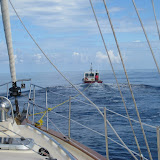
Now, in the early morning , we had come over 300nm from Isla Mujeres but still had about 60 miles to go to arrive at Key West. There was absolutely no wind and the ocean was smooth; without a ripple and we were going nowhere. In checking the weather forecast- there was no wind coming for days, but the Selene was out there somewhere. Just as we were wondering where the trawler was in relation to us, Kathy and John called us on the VHF radio and they were quite close; within a mile! They pulled up close and transferred a doubled 300’ line they had attached to a bridle from their stern. We attached the line as a bridle to our Island Packet and carefully John took up slack. We were moving and moving along well under tow.


Yes, Sea Star, our beautiful sailboat was embarrassingly under tow toward Key West. The Selene pulled us over twenty miles, where we met the Tow Boat US boat, Ranger. After about six hours, after dark, we were safely nudged onto the dock at Conch Marina, Key West.

Thank you Mystic Moon, Tow Boat US and all the friends who met us at the dock to help get us into a safe berth. It took three working days to fix the Yanmar engine. We needed a new water cooling pump, impeller and lots of patience along with our great mechanic who struggled to work on our very inaccessible engine.


After a week we were able to move on from Key West.

Tuesday, November 2, 2010

Leaving the Rio Dulce, Graciosa to Lighthouse Reef, Belize November 3-10th, 2011

BEAUTIFUL BELIZE
Sea Star's last visit on the Rio was to Texan Bay Marina for our last Texas chicken fried steak.  We left the Rio for Bahia Graciosa after lunch at Ak' Tenant Restaurant and picking up our exit papers from Raul in Livingston.  Dan and I motored the 11 miles out the sea bouy over the shallow Livingston bar then across the bay to Graciosa where we spent a quiet night tucked in behind an island while the wind blew 25 knots from the west. Sea Star, and Braveheart left the Rio in what we hoped was a short weather window that would allow us to begin our trip through the country of Belize and then on towards Mexico.


 A bit of rain did come but our memory is not of winds, but phosphorescence around our two boats in the evening. By morning we did move on. As we left the protection of the Bay, the wind was still strong and we were able to move along slowly by motor until we managed to change the sailing angle and head more into the shelter of the mainland Belize after a rolicking sail.

Sea Star, and Braveheart left the Rio in what we hoped was a short weather window that would allow us to begin our trip through the country of Belize and then on towards Mexico.

Our first night out was spent in Bahia Grasiosa in a shallow, protected area to avoid forecast strong westerly winds. A bit of rain did come but our memory is not of winds but phosphorescence around our two boats in the evening. By morning we did move on. As we left the protection of the Bay, the wind was still strong and we were able to move along slowly by motor until we managed to change the sailing angle and head more into the shelter of the mainland Belize.


Our first night in Belize was in the harbor at Placencia where a quiet night was had after a rather slow and careful entry into the lagoon. We did not enjoy that friendly town of funky and fun restaurants because we were flying our Q flag. That means we have not checked in for immigration and were not allowed to leave the boats. We had decided to move quickly through the country. Cruisers had reported being charged a daily per person fee and increased and unpredictable fees for having a boat in Belize.

Moving through Belize we anchored at Sappadilla Lagoon, Bluefield Range a beautiful spot between two islands where I saw a lazing manatee. Unfortunately, the hurricane had destroyed the little fishing camp resort that had been on that island.


We visited Rendevous Cay and snorkeled while trying to chart a safe way by GPS out of that reef strewn area. We looked for the deeper water and then the channel out to the atolls; Turneffe, Glovers and especially for Dan and I looking forward to what we had been told was the gem of Belize,- Lighthouse Reef.
 
We decided to split off from Braveheart who wanted to go toward Cay Corker because they needed fuel. We had a great fish dinner on Braveheart when a local came by and asked us if we could use some fish. For a reasonable price of seven dollars we all ate, and Dan and I returned to Sea Star, leaving via the English Channel in the morning with the tiny sailboats the locals use to travel to and fish the reefs.


LIGHTHOUSE REEF
We did make the thirty nautical mile trip to Lighthouse and it was a highlight of the Belize trip.

 We were able to snorkel a few times and see for ourselves what had caused other friends to be so enthusiastic about this area under the water and visit nearby Long Cay where there is a Red-footed Booby bird rookery. The water was extremely clear. On beginning our entry into the recommended anchorage to the south of the island we didn't think we could make it! The water was so incredibly clear that 8 or 9 feet  looked like 2 or 3 when moving oh soo slowly over the corals and rocks!  We followed the waypoints and after an hour of crawling over and around coral heads we were able to enter the anchorage.  We had been supplied with a set of waypoints from a dear friend and they worked perfectly!


The water was very inviting and we had missed the ocean while we were in the Rio Dulce so that we went swimming right away, and managed to snorkel two more times when the wind allowed it.  The fish were plentiful and we saw some quite large hog fish and snappers.  We found huge coral heads and healthy soft corals making for exciting snorkeling. We didn't spy a lobster, though.  Sea star was the only boat in the anchorage for those few days. When locals arrived to chat, they did have a few lobsters or conch to trade or sell. In this way I tried to mimic a recipe the same friend who gave us their waypoints had served to us-fried conch. Yummy!


 As we were leaving  Dan approached a local boat to ask to buy cleaned conch and lobster.  Through that man we heard of a local spear fisherman who had been diving out on the outer reef and who had his foot bitten by a shark.  The boat was looking for a motor launch to bring the man to Belize to the hospital.  We never heard how it turned out but that is an example of how alone these hardworking fishermen and divers are.

We stayed a few days, visiting the surrounding islands. 

On a little nearby island there is a bird rookery where we climbed an observation tower and I was able to get a few fun pictures of Red-footed Boobies and the Magnificent Frigatebird on display with its red chested display. The island had seen some damage from the hurricane but we enjoyed a walk with the dog who lived full time on the island and a chat with the Ranger. The caretakers of the preserve and rookery come and go, but the dog stays. He had just been removed from the little island a few weeks earlier as a named storm of hurricane force had moved over the island and toward the Capital of Belize, Belize City, causing damage and destruction.  The Caretaker had been cleaning up the island ever since. Trees had been snapped or pushed over, but it appeared the birds were alright and breeding.

Enjoy a slideshow of our walk.
Lighthouse Reef


From Lighthouse we waited for a decent weather window and headed for Isla Mujeres, Mexico, where we knew we would have to wait for weather appropriate to cross to the US.  We began to wonder if we were going to make it back to MA for Christmas.

Two weeks after we were there, Doris and Tom on Footloose and Gene and Brenda on Queen Mary arrived at Lighthouse and spent a month there.  I'm sure they all had a great time in this very special place!


We, unfortunately, could not stay at Lighthouse Reef until our friends on Footloose could arrive. The weather was not conducive for other boats to leave the Rio. Dan and I made the decision that an overnight trip to Isla Mujeres could be accomplished if we left right away, so we spoke with Braveheart by radio. We found they had been having engine problems and had put in to Puerto Aventuras, Mexico for repair. Jack was able to make a fix but for security for all we thought we could catch up to them in Cozumel before Isla Mujeres and go in together.


That was not to be. Sea Star did sail out onto the Chinchuro Banks where we were surrounded by squalls alternating with wind shifts.  We sailed into Cozumel only to feel surrounded by cruise ships the size of cities next to us. We were not comfortable among them in our small sailboat and didn't like the anchorage as it was too open.  As we moved back out into the channel, the wind was very strong and Sea Star was moving along at what felt to me a breakneck speed. The water was rushing under us and the motion was causing strange and loud noises below in the salon where I was trying to rest. Between the wind and the favorable current throughout the night we zoomed into the Isla Mujeres approach channel in the dark of night and had to wiggle our way into the anchorage after a few hours of waiting for light to improve.


ISLA MUJERES, MEXICO
Isla Mujeres was great fun. We anchored out one night and then moved into the Isla Mujeres Marina with Braveheart, who had already arrived, and some recently met cruisers, John and Kathy on Mystic Moon, a Selene trawler. We also met Kathleen and Roy on Islander, another trawler at the dock and the fun began. We walked, explored the town, shopped and Kathleen and Roy lent us their golf cart to shop for food and see the sights. We found the island interesting and a great place to visit. Entering the country of Mexico at Isla Mujeres was reasonably easy. An agent from the marina would have done the entry process for $100 plus the fees for Port Captain and Immigration. We did not use the agent and the process was easily accomplished. We did choose to use the agent as we left Mexico on Thanksgiving Day, to be sure all was in order.


Sunday, October 31, 2010

A Weekend of BIRDWATCHING at Hacienda Tijax October 2010

A Weekend of Birdwatching at Hacienda Tijax October 2010


In my last posting I mentioned seven cruisers, including Dan and me had spent a great four days exploring Tikal, Yaxha and Flores. While reading our local paper, a website called Chisme Vindicator that provides news of happenings on the Rio in English, we read that there was to be the Second Annual Workshop Birding in Guatemala by Tour Green Caribbean right at our marina, Tijax!


Should we attend?


Actually, we wondered why we hadn’t yet heard about the workshop weekend as it was already Wednesday of the week and the program was to begin Friday afternoon with 3:00PM registration and 4:30 to 6:30 guided bird identification walk. The article mentioned the names of the attending bird guides and another man, Esvin Chacon to email for more information. I first emailed Eugenio Gobbato, the owner of Hacienda Tijax, to see if the workshop was meant for any interested birder(such as us) and if the offerings would be in English, because sadly, our Spanish just would not do for a lecture situation.


While deciding about the weekend, of course other activities happen around the Rio. The first of the boats are beginning to leave and this huge power boat with only a single screw engine was struggling to leave his tight slot at the marina dock. He had to move his boat 90 degrees in no space at all. He was shoe-horned out of Tijax by a combination of dock guys (in the small launcha), who pulled him sideways, then by the stern backwards to the open river. We cruisers were all giving advice and monitoring the spiderweb of lines to the remaining boats while staying close to defend our own, should anything go wrong with the plan. Eventually the owner-driver Ray of Sweet Mellisa was able to leave without a scratch. A fine mornings entertainment with our coffee!


Another event that was held on the Rio was a fund-raising event for a local Mayan vocational training school, Ak Tenamit. To raise money cruisers paid an entry fee and dinghied around the Rio to the various marinas picking up one card for a poker hand and sampling the free or reduced fare offered at each stop. Then at the end, at Mario’s Marina, Jim, the owner served everyone All you can eat- Tacos while the hands were played by the people with the best cards. Now- I wonder- HOW did they get the best cards?? Yep, chase other people, bribe, exchange cards- saying “It doesn’t matter, ‘cause it’s all for the kids” Enough money was raised for two kids to attend school for a year and some new materials for learning projects. Tourism is one of the offerings at the school.


Here are a few pics of Mellisa and our Poker Run fun afternoon.

Oct. Poker run


We were pretty busy with the above but we received our answer from the Bird Tour Organizer almost immediately, that yes, the offerings would be in English and that Esvin was already on Tijax property at the restaurant. We missed him there, but soon a knock on the hull of our boat produced Esvin, a young and friendly local Guatemalan who was the organizer of the birding weekend. This was a way of introducing interested eco-minded tourists to many other natural sites quite close to the Rio but not included in the “usual attractions”, like Tikal and Antigua.


After chatting a bit, receiving a nice gift of a cd of birds matched with bird calls and filling him in on our birding experience at Tijax, Tikal and other places we’d had the opportunity to explore, he described how the groups would be formed for the tours. The bird experts Leo Donabo, Bryan Mendez and the head scientist from the Nature Preserve of Cerro San Gil, Miguel Ramirez were scheduled to attend.


Very excited, Friday 3:00PM, still a hot, sunny day Dan and I suited-up; our new Tilley hats, hiking shoes, binoculars and headed up to the Tijax Restaurant to register. We mentioned we had a birding scope and Leo encouraged us to bring it, saying “we can get a boy to carry it for you”. Ok, super. I ran back down the dock to grab the scope and our third binocular for a friend to use.


Friday’s Walk


Dan and I alone were assigned as “the group” with the very experienced but Spanish speaking Miguel Ramirez, the most experienced guide, and 19 year old Bryan who is an English speaker.


The rest of the attending participants of two more adult cruisers, a 10 year old and 13 year old brother and sister; two lively cruiser kids but very serious and interested, and at least four Guatemalans; two men and two women went out with Leo and Esvin. Among that group some needed coaching in use of binoculars and some did not bring any, and had brought cameras instead. They made their way a bit slower than our group and returned to the start earlier than we did.


The four of us, with Dan lugging the scope began to slowly climb the winding, well-cared for path to the upper trail. It was a comfortable evening cool with a breeze and not many mosquitoes. We walked quietly and many of the regular birds we see often when we walk at Tijax were spotted as well as some migrants as this is the time for the Northern birds to arrive in Guatemala- a few Yellow Warblers and a Magnolia Warbler we captured in the scope as well as Blue-gray Tanager, Yellow-winged Tanager, two ? parrots and a Collared Euphonia. All of the last were located on one far away bare-branched tree and the birding scope was helpful to see them clearly. By this time, Bryon offered to carry the scope-so I took his job of logging our sightings in the official record and he carried the scope up the hill and over the two sections of hanging, swinging bridge we had to cross (60 feet above the ground and maybe 150ft across!) By the time we reached the top of the hill, the light was fading so we started back. Miguel was amazing in his ability to hear and identify bird calls or find both the male and female of the species and if the bird was juvenile or adult. He was very personable, but many times Bryon had to translate. It was obvious that Bryon looked up to this older man and enjoyed learning from him as we did.

Here are some pics of the "crew"

Oct. bird worksop


In comparing notes later, at the end of Friday’s hike, Leo’s large group had logged many of the same birds as we did, but not everyone could have seen them all. Dan suggested that the following morning we all go together, as the group was not too large and the others could access the birding scope, also. I think Dan enjoyed getting the scope on the bird quickly so others could line up and see the parrots, a Grey Hawk, Woodpeckers, and the Tanagers among others. We heard but did not locate a Trogon in the woods, but where was he seen later? Right outside the workshop palapa where we were drawing birds!


Learning to Draw


For me there were two highlights from this interesting weekend. First was when we arrived back from our early AM Saturday walk, the quiet Bryon was the workshop leader. He is also an artist. His helpful technique that I’m sure will help many of us not truly versed in bird anatomy was to pass out paper and pencil and step by step give oral directions and model the drawing of a generic “bird” on a white board, with Leo translating for the Spanish speakers. It was engaging, starting with a rectangle for the body and a square to mark the head then using a mark on the first third of the rectangle to locate the wing and the second third for the legs which then clamp onto a branch. He patiently drew crucial anatomical bird parts for a birder to try to see, to distinguish among similar species in the field, naming them in English and Spanish. The next phase was to draw and see slide pictures of types of beaks. We found about fifteen different types. When you see the shape, length or thickness of the beak you know what the bird eats and its main habitat. We did the same with feet and types of tails!


By then we were ready for a break and a group of us shot over to a favorite restaurant across the Rio for prime rib Saturday special! Yummy!


Saturday’s Interruption


Although it was fun and relaxing to pursue an interest with like-minded people we were not to be able to relax for long. Even hiding in the Rio Dulce, a daily task is to check what’s going on in the Caribbean weather. A tropical wave, had become a tropical storm named Richard, near Honduras by Friday, and we were beginning to become nervous. According to four of the seven computer models supplied by NOAA, there was a possibility of the storm swirling along the coastline and curving west into Puerto Barrios or even Livingston at the mouth of the Rio Dulce, before continuing on to go ashore in Belize near Placentia.


We of course were not sure what would happen, but assumed the wind and rain usually associated with a large storm would be a problem for Sea Star, tied to a dock and possibly bouncing around, chafing lines or even pulling from the dock. Even the workshop leaders were concerned that a local stream would rise precluding access to the preserve, so cancelled a birding trip to a Nature Preserve, Cerro San Gil, scheduled for Sunday. Dan and I would have gone, but not when the weather was so unpredictable.


As the caretaker of the boat, your house, a cruiser just doesn’t know what action to take. Primarily we worry and check the internet regularly. There are many sites on the internet that show satellite pictures, are updated as often as every half hour but still it’s hard to know what to do and when to do it. In our case we were thinking – not safe tied to the dock in wind. We could go out on anchor and perhaps drop another anchor, or even two, but then we’d worry about loose boats that do drag, dragging into ours. We could drive the bow into the mangroves, drop an anchor and tie off to trees, but where exactly? What’s the depth and would we be in some trouble with scratching or grounding the boat? But maybe it won’t come here, we hope, so we should stay put. We’d feel a bit silly if we over-reacted.


So what happened was “Captain talk”, beers, showing each other the latest weather reports, and more thinking, watching and worrying until the storm was closer and the reports clearer. By Sunday mid-morning the storm was tracking more Northerly toward Belize and had become hurricane strength going ashore as a category 1 storm but in Rio Dulce we had not a breath of wind nor any rain or surge!


Not this Time- Again!


We had “dodged another bullet” as we often say. We do feel badly for the people of Belize where the storm did go ashore. We heard later that there was no loss of life, so that’s good, but of course there was damage.


Soo..Back to the Birds


We could see on the computer that the track had shifted. We stayed on the dock AND before the professional birders left the second best part of the weekend happened. Esvin came out to the boat to tell us they had located the Tijax mottled owl and we should come and see it. Dan was off the boat with binoculars in a flash, I followed behind with the scope. Dan saw the bird easily as it was in a tree outside of one of Tijax’ small cabins, and went back to the boat for his camera. Well, it was really a pair of owls and here are some pictures that resulted. We finished our birding weekend on an exciting note! Here are Dan’s pictures of the Mottled owl pair at Tijax.


mottled owls Tijax


Some emails to use if you would like to contact Esvin for more information or to arrange a trip to Cerro San Gil or one of the other “off the beaten track” locations. We were told that due to terrain in some places in the nature preserves you would need a guide. esvinchacon@gmail.com


Time to Go to Sea


The major storms supposedly have passed now according to averages and dates, November 1 is the date when some insurance companies relax a bit about “coverage for named storms.” Sea Star seems ready with oil changed, new fuel, filled water tanks, repacked lockers, newly finished teak and waxed hull and lots of food. We are more serious about leaving the Rio and heading North to Florida. We have two boats to travel with, increasing security for all. We’re inviting our older and newer cruiser friends for dinners and last chats. We’re in the mode that is so hard for cruisers --goodbyes to good friends who aren’t going your chosen route.


Next week we should be ready, so this is my last posting until probably USA, possibly Mexico, Isla Mujeres, although there will be other stops in route to break up the trip until the last push over the gulf stream to Dry Tortugas, Key West and Titusville Marina, our ultimate sailing destination for awhile.

Tuesday, October 26, 2010

TIKAL and Yaxha, Guatemala October 16-19, 2010

TIKAL and Yaxha, Guatemala October 16-19, 2010


Majestic! Magical! Awe inspiring!

How did they get the stones up there?

I don’t think I can climb another temple!

Were they peaceful or war-like?

So how did the civilization fall? Why?

Gotta come back here!


These are all thoughts overheard from various tourists talking whom we encountered at the fabulous Mayan ruins of Tikal. They echo my own amazement and impressions in this my third visit to the archeological site of the ruins that once were the largest city state in the Mayan world.

FIRST Visit

Back in 1971 Dan and I drove through the US to Mexico and then to Belize and Guatemala, camping on the back of our white new Toyota pick-up truck. The road to Tikal from Belize was incredibly bad with huge pot-holes and large rocks. It took forever to arrive there. We chugged and bounced and made it to Tikal to camp. I can still remember the lightning bugs, the size and weight of locusts, that kept hitting our tent and us. First visit to the jungle! The ruin was mesmerizing! At that time there were many scientists and archeologists on-site. I don’t remember an official tour guide- but there was a village of Mayan people and they would offer to guide as well as sell local woven handicrafts --and some offered parts of the yet to be excavated temples or artifacts, guaranteeing the authenticity! We strolled through the entire site, climbing and birdwatching for a few days at least. There were toucans, huge flocks of turkeys, lots of monkeys—the whole place was magic, but the sounds at night and in the waking morning were indescribable- loud buzzings and chirps. Oropendolas nests hung like teardrops from the branches of the Ceiba tree. Scary howler howls while crashing through the trees screeching parrots and a full orchestra of chirps.

SECOND Visit

Then in 1998 Dan and I returned with our two boys aged 18 and 14. We had traveled to Rio Dulce by boat, our original Sea Star and we made our trip over the bumpy roads to Tikal by bus. We were excited as parents to share such an experience with our family. Because of road washout we had to wait by the side of the road for about an hour for the construction crew to allow our tour bus to pass through. We stayed at the then primitive Jungle Lodge within the ruin site and attended either an early morning or an evening sun ceremony from Mundo Perdido, enjoying every moment of the jungle’s sounds and smells. We watched the spider monkeys playing in the trees near us, heard the howler monkeys and other jungle creatures.

The temples in the main Plaza were excavated and maybe a few more at each of the larger groupings were visable through the forest growth, but the kids and we were able to climb every one on the original steps carved out by the Mayans. The archeologists were digging inside of temples to check for artifacts and tombs. The Mayan  villagers clustered around the large entry tree, the Ceiba, to ask us to buy their handicrafts. A fantastic and memorable family experience. On the way out of Tikal our bus brought us to another ruin, hardly excavated at all where we were able to look around and climb just one temple up a rickity wooden staircase, that provided a panoramic view of the surrounding area.


THIRD Visit

In 2010 Dan and I are a bit older. We are back on the Rio Dulce on sailboat named Sea Star and this time we wondered if we really wanted to return to Tikal; what may have changed from our first magical visits?  Cruisers returning from their visits to Tikal reported enjoying the trip and visiting the nearby town of Flores. Some other cruisers knew we were considering going and they wanted to go, too. Our transportation could have been bus again. Comfortable, air-conditioned buses now run a few times a day from Rio Dulce, Fronteras to Tikal and the nearest town to Tikal, Flores. In Flores, an island situated on Lake Peten, there is an airport with connections to Belize and Mexico, and a bus station where buses from Guatemala City and Antigua bring in tourists daily, and there are lots of restaurants and air-conditioned hotels. The hotels in the site of Tikal are limited in the time they run their generators for electricity. It can get hot and some tourists are put off by that problem.


Because we were a group of seven people, we rented an air-conditioned van with a sane driver (as opposed to the typical bus driver) who, for a reasonable fee, brought our group to and from Fronteras, and to and from both the Tikal and Yaxha ruins. We choose to stay in Flores to enjoy the restaurants and see the town and Lake Peten. Dan and I were torn about staying in town or in the jungle. To keep the group together we chose to stay in-town. To accommodate us and our desire to get into Tikal as early as possible the group arose at 4:00AM to arrive at the National Park of Tikal by entry time at 6:00AM. We had to sit in the van for ½ hour while waiting for the gates to open as the sun came up, and we realized that although we did our best to hurry, even forgoing our included full, hot breakfast and taking a box breakfast from our hotel, we would still miss sunrise in the jungle:(


Already behind us (our van was first at the gate) there was a line of buses, collectiveo vans and private cars. As about fifty buses decended into the park behind us, Dan and I entered the Park area , bought our $20 each tickets and quickly grabbed a coffee and headed out to walk to Mundo Perdido where, we were told by the guide the others hired, there were the most birds to be seen. As we all began the walk to the main gate we passed a certain small flowering tree. I did remember that spot because as we looked up- a Toucan, and Collared Aracaris squawked while eating the berries.

We started toward Mundo Perdido (The Lost World) and by the time we walked away from the main plaza and its temples we could see only one other tourist on our path. Terrific!  He had a nice camera with a telephoto lens and was photographing monkeys! As the spider monkeys swung above our heads and we heard the howler monkeys somewhere else in the park, their deep barking sound resonating through the park; we began to relax and enjoy being at Tikal again.

We chose a temple to climb because it was in the sun and shaded by the folliage nearby-a good place to check for the early morning birdlife.  While on top of the temple we caught a glimpse of what we hoped was the Orange breasted Falcon sitting in the tippity-top of a very tall tree barely in our binocular view. Turns out it was! Also in the same tree in the plaza near Perdido we were able to observe all three toucan species together- the elusive Emerald toucanet, the Collared toucan (aracari) and Keel billed Toucan as well as other birds flitting in and around that tree.


Still magical although changed.

Some changes were certainly for the better. In 1979 UNESCO took over the administration of Mayan ruins all over Quatemala and Tikal and others were named World Heritage Sites. Serious about conserving these national treasures the looting was stopped and although the Mayan village at the gate to Tikal was relocated, it makes a nicer, in my mind, visit when the hawkers of all the crafts and their child labor salespeople are not allowed to follow the tourists. There are more museum areas and craft sales areas where a tourist can browse without being accosted.


More excavation has opened up another temple, Temple V, with a new wooden, sturdy stairway to access the undercomb area at the top of the 46m climb. Guatemala received the funds for that part of the excavation from the country of Spain.


Tourists may no longer climb on the original stairs on the most popular temples. Apparently two tourists fell to their deaths from temple IV, so some restrictions were made. I can see how that could happen as tourists, for a better look at the top comb of the temple, used to be allowed to climb up about 50-60 feet more than now allowed, up where the falcon pair now lives. On many temples, original stone stairs have crumbled a bit from wear. The access is made more safely by the wooden staircases with sturdy railings placed in shady areas on the sides or back of the temples when possible. The exciting view down from the top still remains. Fortunately for me I did not have to climb down the steep stone stairway as before, scared to death, way too hot and feeling about to topple!


Evidence of ongoing excavation is seen in the tall scaffolding, and heavy plastic tarps covering large areas of ground around the base of some temples. Disappointingly, erosion has taken a toll on many, probably most of the stelai(large carved stone monuments telling the history of the rulers of Tikal) , but new information continues to be discovered from the carvings as the language of the ancient Maya is deciphered.


During our time in Tikal, one long day, Dan and I and the others climbed as many temples as we could possibly manage , walked miles on the ancient causeways and through the jungle on marked paths. We saw toucans, arricaries, Emerald Toucanet , Crested Guan, (now that’s a big bird) Montezuma's Oropendolas, lots of smaller birds, oscillated turkeys, coatimondi, pretty good sized spiders, spider monkeys and howler monkeys and a Squirrel Cuckoo—but the best find of all was the Orange breasted falcon that lives on the crest of temple IV.


The next day we took our van to see the ruin of Yaxha. Dan and I are pretty sure that may have been the ruin we saw twelve years ago that was just the unexcavated site with one large temple to climb up on rickety wooden steps. Now it is a fantastic place to visit, with broad walkways to the four cardinal directions on the old causeways past partially excavated smaller temples. Although growing in popularity, this Mayan site sees few tourists. The plazas are quiet open spaces and bench areas are provided to sit and commune with nature. Dan and I were atop a temple and near the back we were lucky enough to spot two great birds; a Blue crowned Motmot of which I took terrible pictures and an Bright rumped Attila. We spent a morning at Yaxha, then ate at a local place the guide, Rubin, brought us to nearby.

Our trip took three nights and four days. But soon we were back on the Rio.


Here are my pictures of Tikal and Yaxha. They are a combination of all our friends on the trip, with thanks! To access information about the Maya whose civilization seemed to just disappear about 900BC just type Maya history on Google as my link didn't work.


Click to see four different slideshows.


Wednesday, October 20, 2010

ENJOYING THE SLOW PACE OF THE RIO DULCE-Sept. 16-Sept. 30, 2010

Enjoying the slow pace of the Rio Dulce

So I'm one blog behind.  Next post Tikal and Yaxha, Guatemala.

Sea Star and Dan and Kathy have been a bit sedentary. We’re retired and it’s allowed I guess. We kicked ourselves out of the boat one morning, without even having our coffee, with the birding scope and the mount that allows pictures to be taken through the telescope. We hadn’t given the system a trial since the mount had been purchased. We took a walk along the main path out of Tijax and here are some of the pictures we managed with Dan’s Nikon. It will take lots more practice, we think.  We were verry far away from the subjects.

click to see pictures taken by Dan through birding scope- Nikon D300

Scope birding pictures


We have started to watch the weather more seriously as there have been a series of weather fronts and lows that could have amounted to problems for us had we not been in the sheltered river area. One of those low pressure areas developed into Tropical Storm Matthew and kind of ruined a planned weekend at the second Full Moon party at Denny’s Beach. About ten boats sailed or motored into Lago Izabal on Wednesday, Sept. 21. We were treated to happy hour and hospitality by Denny and his welcoming and friendly staff, then an excellent surf and turf menu selection of steak and shrimp. The rain began to fall as we headed back to our boats, the wind picked up across the lake causing “good ol’ rock and roll” all night.


Our neighbor boat, Lorelei, with Patty and Gary aboard had been having a string of boat issues, one of which was repeatedly gluing their dinghy, but having it just go flat again. To a cruiser, having a non-functioning dinghy is a disaster. Dan and I had just fixed ours before the trip.  It had been getting soft about every second day, so that was manageable. If you have no dinghy you have no transportation, thus no groceries, no dinners out and it’s like your car is in the garage until somebody can fix it properly. Well Gary glued, and stuck patches on the under two year old! dinghy but when inflated, it just blew out and was dead and flat!  Disaster.


Denny loaned the couple a shallow, hard-bottomed dinghy to get back and forth with their dogs to shore. In the choppy anchorage, at night, the little borrowed dinghy flipped over with Gary's motor still on it!  Luckily one of them heard the dinghy hitting the hull of their boat. Patty radioed their distress to the boats in the anchorage but no one heard her call. There had been lightning and some of us turn off any electronics we can, so if we are struck less damage will occur, so we were not monitoring the radio.  That was a mistake. Finally Gary and Patty roused Denny, who roused his launch man and the man dragged the dinghy back to shore, but upside down, with the motor under the water. Probably not good! The time of this fiasco was 3:30AM.

Now Patty and Gary take this kind of doodoo in stride. The next morning there were no recriminations that no one in the anchorage saved the dinghy, and they had not had much sleep. The wind was down but it was still raining. Other boats started to leave because tropical storm Matthew was supposed to be coming right for us in one of the NOAA models. I bailed our dinghy twice to keep the water from sinking it as the rain pored down.

One of our plans for the day had been to go to the nearby Mayan ruins of Quirigua. The other was horseback riding. No one had signed up for the riding as it was obvious the trails were wet. Then we cancelled the ruins trip that morning. Dan and I were not too excited when checking our weather on the internet. Dan didn’t think we were in for more than rain, and really didn’t expect the storm until the next day. We decided to be prudent cruisers and one by one the boats slid away to return down river and to the safe marina slips, as the now glorious sun appeared.

Sea Star arrived uneventfully back at Tijax a few hours later, but once again, Gary and Patty, the last to leave Denny’s because the guys fixed Gary’s outboard, lost their alternator on the way back. Gary just happened to have a spare and replaced the alternator as Patty motored and they traveled, appraising the fleet of their progress up the river.

The day was not over for them yet. Patty, who loves to take pictures and write stories for the Chisme Vindicator, the Rio cruiser’s newspaper, realized she had lost her camera. It was later recovered but the tension was high for awhile.

The end of that saga is Patty and Gary located and bought a bigger, stronger, faster dinghy and their motor is fine. Buena Suerte!

I have no pictures of Denny's this time, however here are a few more pics.  The first two are of a little bat who I think fell out of our sail when we furled it.  We thought we killed it in the boom brake but it was fine and we saw it fly away.
The others are another walk on Tijax property.  My battery gave out just as we approached the sixty-foot high swinging bridges.  What a beautiful canapy tour they have.  I'll try another day.

click slideshow
end Sept. Dulce